
World Mother’s Day: A Celebration of Pure Love and Sacrifice

- আপডেট সময় : ০৬:৫৫:১৪ অপরাহ্ন, রবিবার, ১০ মে ২০২৬ ৫ বার পড়া হয়েছে
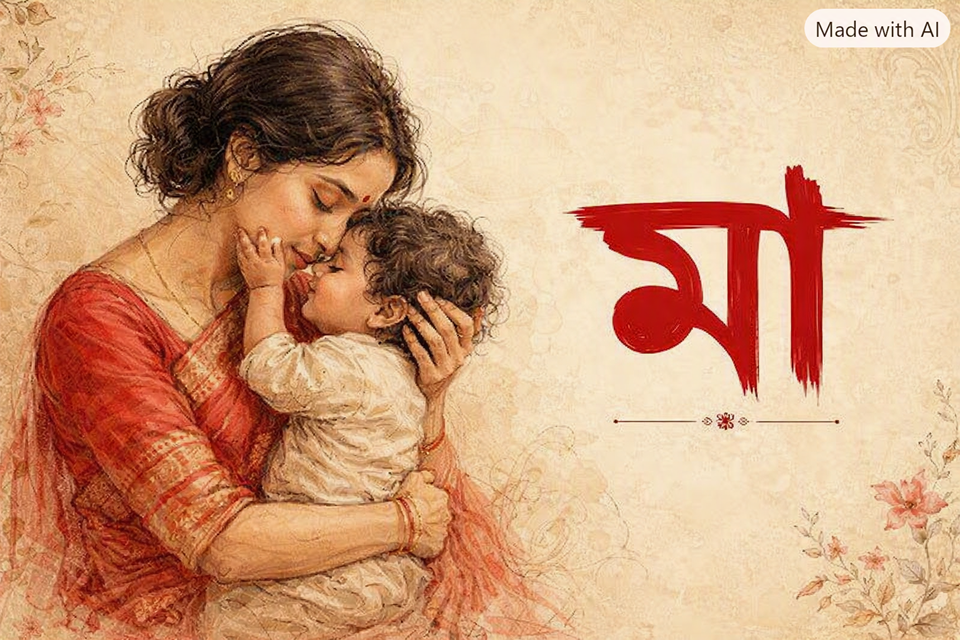

Mother’s Day: Wherever I look, ah, nothing compares to a mother / None greater than mother, none, none!” — this eternal truth from National Poet Kazi Nazrul Islam echoes the voice of every child’s heart. Mother — a tiny word of just one syllable, yet its depth and vastness are as boundless as the sky. From before birth to every turn of life, the one who shelters us like a selfless banyan tree is none other than mother. A child’s smile colors her world, while even the slightest pain brings tears to her eyes. Today, on World Mother’s Day, we honor that boundless love and sacrifice. Every year, the second Sunday of May is observed worldwide as Mother’s Day.
The first relationship in a person’s life is with their mother. After birth, a child’s first refuge, first safety, first language, and first lessons all come from her. Learning to walk, to speak, to distinguish right from wrong, to embrace humanity — every foundation of life is built holding a mother’s hand. That is why it is said: the greatest role in shaping a child’s future belongs to the mother.
Mother’s love is considered the most selfless love in the world. Even in a child’s mistakes, failures, or weaknesses, she protects and nurtures. When all doors close, a mother’s door never does. A small smile, a phone call, or a simple check-in fills her with joy. Mother’s Day reminds us that honoring her is not just about financial support; it is about giving time, valuing her feelings, and showing respect.
In today’s technology-driven busy lives, emotional bonds within families are shrinking. Work, distance, and personal pressures often keep children away from their mothers. Some live abroad, some are lost in city life, and some, even under the same roof, forget to check in. Yet mothers spend their entire lives sacrificing dreams, comfort, and desires for their children. In Bangladesh, countless mothers from lower- and middle-income families tirelessly struggle to secure their children’s future, often neglecting their own needs for education, healthcare, or savings. Their sacrifices are unmatched.
In Bangladesh’s social fabric, mothers are the cornerstone of family life. Whether in villages or cities, they hold families together. Sleepless nights during a child’s illness, hiding their own pain while caring for everyone, or nurturing dreams in poverty — mothers silently bear countless sacrifices.
Yet reality brings concern. The growing number of old-age homes signals a decline in family and social values. Many mothers who once held their children close now face neglect in their final years. Mother’s Day highlights this crisis too. A mother does not seek luxury; she seeks love, respect, and sincerity.

The History of Mother’s Day
Modern Mother’s Day began in the United States. Historians trace its roots to various social and humanitarian movements. In ancient Greece, the goddess Cybele was worshipped as a mother figure, while in Rome, celebrations honored the goddess Juno. Later, in Europe and England, “Mothering Sunday” became a tradition.
The most significant contribution to modern Mother’s Day came from American social worker Anna Reeves Jarvis and her daughter Anna Marie Jarvis. Anna Reeves Jarvis worked to reduce child mortality and raise awareness about mothers’ health, founding “Mother’s Day Work Clubs.” After her death on May 5, 1905, her daughter Anna Marie Jarvis began campaigning to honor her mother’s sacrifice. On May 10, 1908, the first official Mother’s Day was celebrated at Andrews Methodist Episcopal Church in West Virginia. Thanks to her tireless efforts, in 1914, U.S. President Woodrow Wilson declared the second Sunday of May as Mother’s Day. From there, the celebration spread worldwide, including Bangladesh.
Celebrations and Reflections
In Bangladesh, Mother’s Day is marked by social, cultural, and family events. Some gift flowers, others give presents, while many share tributes on social media. Yet many believe the day should not be limited to flowers, gifts, or posts. True respect lies in understanding her feelings, being present, and expressing love in daily actions.
From a religious perspective, mothers hold the highest honor. In Islam, immense importance is placed on respecting and caring for mothers. The Prophet Muhammad (peace be upon him) said: “Paradise lies at the feet of mothers.” This highlights the depth of her dignity. Similarly, nearly all religions and cultures see mothers as symbols of love, compassion, and sacrifice.
In literature, music, poetry, and cinema, motherly love has always held a special place. Nazrul wrote: “Wherever I look, ah, nothing compares to a mother.” Rabindranath Tagore and countless other writers also immortalized the infinite tenderness of mothers in their works.
Experts emphasize that today’s youth should be more attentive to their mothers despite busy lives. Spending time with her, checking on her health, or helping with small tasks strengthens bonds. Time may bring back many things, but nothing can replace a mother’s love.
Thus, Mother’s Day is not just a celebration — it is a moment of self-reflection. Are we truly valuing her sacrifices? Are we understanding her feelings? Finding answers to these questions may be the day’s greatest significance. For a mother seeks no luxury — only love, respect, and sincerity.
নিউজটি শেয়ার করুন
আপলোডকারীর তথ্য